

Dawhenya Irrigation Solar Project Set to Enhance Ghana’s Renewable Energy Sector
Dawhenya Irrigation Solar Project Set to Enhance Ghana’s Renewable Energy Sector
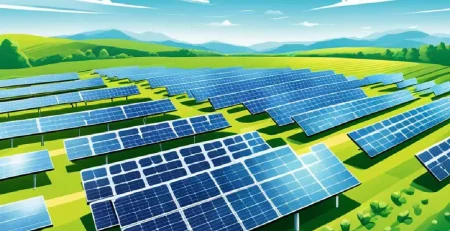
The one megawatt solar facility for the Dawhenya Irrigation Scheme in the Greater Accra Region is likely to increase the country’s renewable energy stock from the current 3.5 per cent to 5.2 per cent by next year.
Its completion is bound to inch the country closer to attaining the 10 per cent renewable energy target by 2030, and this will constitute a major effort towards enhancing the highest productive uses of the country’s energy resources.
The Minister of State at the Ministry of Energy, Herbert Krapa, said this at a knowledge-sharing seminar in Accra last Wednesday on a project dubbed “Water-Energy-Food Nexus Programme.”
Facility
The solar facility is being supported by the Korean government under a $5 million energy component of a $30 million grant facility provided to the Ghanaian government by the Korean Official Development Assistance, KODA, with funding from the Korean Association of Machinery Industry, KOAMI, and the Korea Institute for Advancement of Technology, KAIT.
The two Korean institutions are implementing the project in collaboration with Ghana’s Ministries of Energy and Finance, the Ghana Irrigation Development Authority under the Ministry of Food and Agriculture, the Energy Commission, and the Electricity Company of Ghana.
It is being built to ensure reliable and sufficient power supply for irrigation purposes, particularly the regular water supply, which shall support farmers to produce more at a cheaper cost throughout the year.
Food Security
According to Mr Krapa, the facility would also help the nation increase its agricultural output, food security, and ensure that there is sustainable water management while the government’s flagship programme, Planting for Food and Jobs, is accelerated.
He explained that the project was to ensure cleaner and more environmentally sustainable sources of energy were integrated into the productive sectors of the economy, and more directly, utilizing cleaner sources of energy in powering irrigation systems for agricultural production in Ghana.
“This project epitomizes how crosscutting approaches and interinstitutional collaboration could help solve various challenges in a coherent manner and bring development and prosperity to a broader group of people at a go,” he added.
Moratorium
Mr Krapa said the moratorium on distributed renewable energy had been lifted paving the way for the launch of Net Metre Renewable Energy Programme.
“We have, therefore, rolled out the government-built solar project with €22 million funding by KfW, a German international development cooperation that works together with its partners in developing countries in pursuit of sustainable development, and also rolled out the 12,000 Net-Metre solar photovoltaic PV project as part of the $85 million state-of-the-art Renewable Energy Programme to promote productive uses of energy and increase our renewable energy stock,” he said.
Rice production
The Director of Korea Programme of International Agriculture KOPIA, Dr Choong-Hoe Kim, explained that the organisation has been partnering other institutions in Korea to ensure smooth implementation of the project.
He declared that very soon the Korean government would invest $27 million within the next five years to increase rice production, including the provision of 100 hectares of mechanised irrigated farmland to raise 5,000 tons of quality rice seeds for free distribution to beneficiary rice farmers in the country.
Kap Seok Yoon of KOAMI assured that the Koreans are going to use the project to secure additional financing to fund new projects, including landfill gas for power generation and mini grid electrification schemes that will help contribute towards “last mile electrification targets.”
Summary:
An overview of the country’s energy sector was done by the Project Coordinator and head of Renewables at the Ministry of Energy, Seth Mahu, who stressed that the country’s quest to increase its renewable sources of energy was on course, with a number of ongoing projects scaling up the sector.
He added that the project would enhance the water-energy-food ecosystems research and development, build the required human and institutional capacities for its effective operation and management, and ensure the overall sustainability of the facility.




Leave a Reply